AI Use in Social Impact Measurement & Practice: 2026 Pulse Survey Results
This report shares results from a 2026 pulse survey by Social Impax and SIMNA on AI use in social impact measurement. It finds AI use is now widespread, mainly saving time, though confidence and responsible use practices still lag behind adoption. It explores what practitioners need next.
AI Use in Social Impact Measurement & Practice: 2026 Pulse Survey ResultsAmpe Akelyernemane Meke Mekarle ("Little Children are Sacred")
Ampe Akelyernemane Meke Mekarle ("Little Children are Sacred") is the 2007 report of the Northern Territory Board of Inquiry into the Protection of Aboriginal Children from Sexual Abuse.
Ampe Akelyernemane Meke Mekarle ("Little Children are Sacred")Are we mates yet? Agreement making between States and First Nations
This report analyses colonial impacts, truth-telling, and pathways to self-determination, offering insights into decolonisation. While focused on agreement-making between Australian states and First Nations peoples, its strategies for embedding equity and Indigenous sovereignty into governance, policy, and community development have broader relevance.
Are we mates yet? Agreement making between States and First NationsAustralia’s Social Venture Ecosystem: Understanding the Support and Development Landscape
This report maps Australia's social venture ecosystem, covering early-stage support programs and system-level "Apex" organisations. It finds many gaps and overlaps in support, driven by the sector's early stage and limited ability to pay. It explores where funders and the sector can strengthen the ecosystem.
Australia’s Social Venture Ecosystem: Understanding the Support and Development LandscapeBeyond the Myth of Sustainability: Lessons from Failure in Social Enterprise
This article, written by Kevin Robbie of Think Impact, challenges the idea that social enterprises should be fully self-sustaining. Drawing on sector-wide conversations about failure, it argues that many struggles reflect gaps in funding and policy, not poor leadership or weak execution.
Beyond the Myth of Sustainability: Lessons from Failure in Social EnterpriseBuilding a Taxonomy of Jobs-Focused Social Enterprise in Australia
This insights report, developed by University of Melbourne researchers, presents a new taxonomy of Australia's work-integration social enterprises. Drawing on a survey of sector operators, it shows just how varied WISEs are in structure, focus and how they pay the people they support.
Building a Taxonomy of Jobs-Focused Social Enterprise in AustraliaBuilding Resilient Social Enterprises in Queensland
This report from The University of Queensland provides one of the first comprehensive studies of social enterprise growth in Queensland. It combines interviews and survey data to identify the capabilities that help social enterprises, including regional, start-up, and Indigenous enterprises, grow and succeed.
Building Resilient Social Enterprises in QueenslandBusiness for good: The size and economic contribution of social enterprise in Australia
The Business for Good report presents national data on Australia’s social enterprise sector. It highlights the sector’s economic contribution, job creation, and community impact, and outlines what social enterprises need to grow. The report calls for stronger policy support and investment to unlock the sector’s full potential.
Business for good: The size and economic contribution of social enterprise in AustraliaClimate, Country, and Our Future
This knowledge paper from First Nations Affairs draws on three national workshops with Aboriginal Community Controlled Organisations to examine First Nations climate leadership in Australia. It argues that communities are already doing climate work, and that funding and policy systems must recognise and resource their authority to lead it.
Climate, Country, and Our FutureClose the Gap, Community Voices: The Pathway to Justice, Equality and Healing
This report from the Close the Gap Campaign examines why progress on Aboriginal and Torres Strait Islander health and life outcomes remains slow, despite years of government commitments. It argues that public sector reform and stronger laws are needed to make change real and lasting. Useful for policymakers, practitioners, funders and community organisations working in Indigenous health and social justice.
Close the Gap, Community Voices: The Pathway to Justice, Equality and Healing'Connecting Pathways to Employment with the Work Integration Social Enterprise (WISE) Model', Centre for Social Impact
This report by CSI Swinburne introduces the WISE-Ability model, a framework for transforming Australian Disability Enterprises (ADEs) into more inclusive organisations. It supports employment pathways for people with disabilities, aligning with NDIS funding and fostering open employment opportunities.
'Connecting Pathways to Employment with the Work Integration Social Enterprise (WISE) Model', Centre for Social ImpactCosts and benefits of tailored job support programs, Paul Ramsay Foundation
This research demonstrates the costs and benefits of tailored employment support programs for people facing complex barriers to work, providing evidence and tools to help funders and organisations make effective investments in job-seeker programs. This report from 2024 aims to collate and strengthen existing evidence of ’what works’ in which contexts, while establishing an evidence base for the type and level of resourcing needed to achieve more enduring outcomes for those facing complex barriers to work.
Costs and benefits of tailored job support programs, Paul Ramsay FoundationDriving impact 2026 Unlocking the opportunity for corporate social impact investment in the United Kingdom
This report explores how companies can use social impact investment to support charities and social enterprises while creating lasting social value. It explains what corporate social impact investment is, why uptake remains low in the UK, and what organisations can do to overcome barriers and unlock impact-first funding models.
Driving impact 2026 Unlocking the opportunity for corporate social impact investment in the United KingdomEarth for All: A Survival Guide for Humanity
Earth4All’s two-year research investigates pathways to achieve global wellbeing within planetary boundaries by 2100. It examines two scenarios: ‘Too Little Too Late,’ continuing current economic policies, and ‘Giant Leap,’ requiring bold decisions and investments. The report identifies five critical turnarounds—poverty, inequality, women’s empowerment, food systems, and energy transformation—and calls for active governments, wellbeing economies, and urgent action this decade. Using system dynamics models, it highlights affordable economic shifts and proposes citizens’ assemblies to overcome political barriers.
Earth for All: A Survival Guide for HumanityFirst Nations Social Enterprise Circle: Findings Report
This report from the First Nations Social Enterprise Circle shares insights from organisations creating community impact, deeply grounded in values, while facing barriers rooted in colonisation. It invites power-holders across the social enterprise sector to respond with accountable actions and structural change that enables First Nations leadership and self-determination in the social enterprise space.
First Nations Social Enterprise Circle: Findings ReportGari Yala 2 (Speak the Truth) Full Report: Centreing the Work Experiences of Aboriginal and/ or Torres Strait Islander Australians in 2025-2026
Gari Yala 2 (Speak the Truth) is an Indigenous-led national survey report from the UTS Centre for Indigenous People and Work. It finds that racism and cultural unsafety remain widespread in Australian workplaces, with little improvement since 2020. It is essential reading for employers, HR professionals, and anyone working in diversity and inclusion.
Gari Yala 2 (Speak the Truth) Full Report: Centreing the Work Experiences of Aboriginal and/ or Torres Strait Islander Australians in 2025-2026Growing With Integrity - Reflections for the First Nations Creative and Cultural Sector
This resource from Cox Inall Ridgeway captures themes from conversations with First Nations creatives, arts organisations and social enterprises about growth, partnerships and impact. It reinforces that First Nations creative and cultural organisations are not simply arts businesses or service providers. They are vehicles for cultural continuity, storytelling, representation, economic independence and intergenerational knowledge sharing.
Growing With Integrity - Reflections for the First Nations Creative and Cultural SectorHidden Vulnerabilities: Cyber Security and Essential Community Services in NSW
This report looks at cyber security in NSW's not-for-profit social service sector. Written by WorkVentures for NCOSS, it assesses 14 organisations and finds none reached a mature standard, scoring an average of 57 out of 100. It sets out why the gap matters and what could close it.
Hidden Vulnerabilities: Cyber Security and Essential Community Services in NSWInsights on Field-Building Intermediaries
This paper from Social Ventures Australia examines how field-building intermediaries, organisations that coordinate non-profits and funders to tackle complex social problems, are funded in Australia. It finds long-term, patient philanthropic funding is key, but hard to secure. It explores funding models across an intermediary's lifecycle.
Insights on Field-Building IntermediariesLeadership in Social Enterprise - How to Manage Yourself and the Team
This report by the Schwab Foundation for Social Entrepreneurship supports social enterprise leaders in tackling unique challenges like balancing social impact with commercial goals, managing diverse teams, and meeting stakeholder expectations. Grounded in global insights from interviews, case studies, and surveys, and developed with input from experienced social entrepreneurs, it offers practical, stage-specific guidance. Designed as a collaborative tool, it fosters knowledge sharing and equips leaders with strategies to drive mission-driven organisations effectively.
Leadership in Social Enterprise - How to Manage Yourself and the TeamLessons from France: Embedding Work Integration Social Enterprises in the National Employment System
This report, published by White Box Enterprises, explores how France embeds work-focused social enterprises within its national employment system. It argues Australia could learn from France's approach as it redesigns its own employment services, particularly around funding and recognising these enterprises' role.
Lessons from France: Embedding Work Integration Social Enterprises in the National Employment SystemNot-for-profit Sector Development Blueprint
This report, published by the Department of Social Services, sets out a ten-year plan to strengthen Australia's not-for-profit and charity sector. Developed with sector leaders, it argues for stronger funding, regulation and government partnership so charities can keep supporting Australian communities long term.
Not-for-profit Sector Development BlueprintOn Our Own Terms: Emerging Insights
This report from the On Our Own Terms project explores Lived Experience Leadership in Australia, meaning leadership grounded in personal experience of marginalisation or exclusion. Drawing on conversations with ten leaders, it argues this is a mature, community-anchored discipline already driving systems change, and calls on institutions to properly resource and recognise it. Relevant to funders, policymakers and social sector organisations.
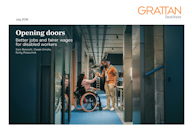
On Our Own Terms: Emerging InsightsOpening Doors: Better Jobs and Fairer Wages for Disabled Workers
This report, written by Sam Bennett, Owain Emslie and Reilly Polaschek of the Grattan Institute, examines why Australia's disability employment system is failing people with high support needs. It argues for reform to boost open employment, phase out sub-minimum wages, and lift standards for disability-focused social enterprises.
Opening Doors: Better Jobs and Fairer Wages for Disabled WorkersParliamentary Inquiry: Economic Self-Determination for First Nations Australians
This government inquiry explores how to improve economic self-determination and opportunities for Aboriginal and Torres Strait Islander peoples. Led by the Joint Standing Committee on Aboriginal and Torres Strait Islander Affairs, the inquiry examines barriers and enablers for training, jobs, business growth, access to capital and economic leadership. It gathers evidence from experts, organisations and communities and makes recommendations to strengthen pathways for First Nations economic participation and decision-making.
Parliamentary Inquiry: Economic Self-Determination for First Nations Australians'Part Discount Grocer, Part Social Connection: Defining Elements of Social Supermarkets', Centre for Social Impact
This research paper by the Centre for Social Impact Flinders explores social supermarkets as an innovative model for addressing food insecurity. Combining affordable food access with social support, these supermarkets move beyond traditional food relief by integrating dignity, choice, and community connection. The paper highlights how social supermarkets offer a comprehensive approach, including financial, emotional, and skill-building services, fostering long-term independence and resilience for clients.
'Part Discount Grocer, Part Social Connection: Defining Elements of Social Supermarkets', Centre for Social Impact'Payment by Outcomes: Measuring the Effectiveness of Jobs-Focused Social Enterprises', Centre for Social Impact
This report by CSI Swinburne evaluates the Australian Government’s Payment by Outcomes (PBO) trial, which funds jobs-focused social enterprises based on employment outcomes. It assesses the impact on individuals facing work barriers, including those with disabilities, and explores the trial’s systemic and policy implications for employment services.
'Payment by Outcomes: Measuring the Effectiveness of Jobs-Focused Social Enterprises', Centre for Social ImpactPrepare for Funding: The 4 Ps
This guide by Sefa (Social Enterprise Finance Australia) helps social enterprises get ready for funding. It explains four key areas to focus on: Purpose, Plan, Profit, and Prudence. It provides practical advice to strengthen strategy, financial planning and governance so organisations can confidently approach funders and investors.
Prepare for Funding: The 4 PsProject Drawdown: The World’s Leading Resource for Climate Solutions
Project Drawdown is a nonprofit organisation dedicated to identifying and scaling science-based solutions to combat climate change. Focused on equitable, safe, and effective approaches, the organisation conducts research, engages stakeholders, and promotes solutions to drive meaningful action. Through storytelling and collaboration, Project Drawdown shifts the narrative on climate change from despair to possibility, offering practical pathways for individuals and organisations to contribute to impactful climate action.
Project Drawdown: The World’s Leading Resource for Climate SolutionsRAP Alignment: Opportunities, Learnings and Insights
This report from Dark Lightning draws on conversations with First Nations leaders and practitioners to explore how Reconciliation Action Plans (RAPs), formal commitments organisations make to advance reconciliation, can move beyond compliance and create genuine economic opportunity. It includes a practical six-step pathway for more meaningful engagement.
RAP Alignment: Opportunities, Learnings and InsightsReflections on the Funding Landscape for Rural, Regional and Remote Social Impact
This report shares findings from a deep learning community of rural and remote impact leaders and funders across Australia. It argues that poor data, mismatched communication and hidden costs are holding back funding for social impact outside cities, and suggests new capital models to fix this. Useful for funders, impact leaders and policymakers.
Reflections on the Funding Landscape for Rural, Regional and Remote Social ImpactResourcing First Nations Enterprises: Insights from a Social Enterprise Development Learning Community
This report from the First Nations Projects Institute captures 25 First Nations contributors' experiences of funding systems. It finds that current funding models are scarce, complex and often misaligned with First Nations ways of working.
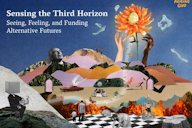
Resourcing First Nations Enterprises: Insights from a Social Enterprise Development Learning CommunitySensing The Third Horizon
This report, published by Arising Quo, explores how funders and wealth holders can better recognise and support transformative social change. Drawing on interviews with practitioners, it proposes 13 capacities, like healing and unlearning, that can be added to popular systems change frameworks.
Sensing The Third HorizonShaping and Fuelling Change
Shaping and Fuelling Change is a new national report examining the role of philanthropy in social enterprise. It calls for a shift, towards longer-term and more flexible approaches that support systems change.
Shaping and Fuelling ChangeShe Gives: Growing Women's Giving in Australia
This national research report from She Gives explores how women in Australia engage in giving and philanthropy. It highlights trends, motivations, barriers, and opportunities, offering insights for organisations seeking to better understand and engage women as donors and changemakers within the impact economy.
She Gives: Growing Women's Giving in AustraliaSocial Enterprises: Unlocking life changing economic power
This booklet introduces social enterprise in a simple and practical way. It explains what social enterprises are, how they work, and why they matter. The resource also shares examples and guidance to help people understand how business can be used to create positive social impact.
Social Enterprises: Unlocking life changing economic powerSocial procurement document library
This portal provides access to documents about Victoria’s Social Procurement Framework. It includes the framework, case studies, and guidance for buyers. The resources explain how the Victorian Government uses procurement to achieve social and sustainable outcomes, and help social enterprises understand how to work with government buyers.
Social procurement document library'Space for Community: Strengthening our Social Infrastructure', Power to Change (2022)
This report by the British Academy and Power to Change examines how social infrastructure strengthens community resilience. It highlights key spaces, their role in fostering inclusivity, and policy recommendations for maintaining and enhancing social infrastructure.
'Space for Community: Strengthening our Social Infrastructure', Power to Change (2022)'Stories to save the world', Futerra
This resource explores the power of storytelling in addressing climate change - its underlying ideas can be applied to other areas of impact. It argues that while the science and technology for combating climate change exist, what's missing is the right story to motivate action.
'Stories to save the world', FuterraSustainable Impact: How NFPs are building social enterprises that pay their way
This Social Traders report examines how not-for-profits build social enterprises that pay their own way. Drawing on four case studies, it finds strong leadership, strategic volunteer use and patient funding are key to success.
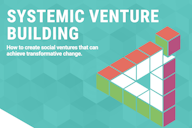
Sustainable Impact: How NFPs are building social enterprises that pay their waySystemic Venture Building - How to create social ventures that can achieve transformative change
Systemic Venture Building explains how new businesses can be designed to change entire systems, not just solve isolated problems. Developed by Metabolic, this approach focuses on creating multiple, connected ventures that work together to shift industries like energy, food and materials towards long-term social and environmental impact.
Systemic Venture Building - How to create social ventures that can achieve transformative changeSystems Mindsets & Practice for Social Enterprise
This resource explores the importance of systems thinking in social enterprise, advocating for interconnected approaches to tackle complex challenges. It introduces key practices, including adopting pluralistic perspectives, fostering collaborative networks, and addressing systemic issues through targeted interventions. By focusing on relationships, complexity, and leverage points, social enterprises can drive meaningful change while balancing specific actions with broader systemic goals.
Systems Mindsets & Practice for Social EnterpriseThe Nundah Community Enterprises Cooperative (NCEC) Evaluation Report and Research Project
This report explores the work and impact of Nundah Community Enterprises Cooperative. It shows how a community-owned enterprise can create jobs, support inclusion, and build local economic participation. The resource highlights the value of co-operative models for strengthening communities and creating meaningful social impact.
The Nundah Community Enterprises Cooperative (NCEC) Evaluation Report and Research ProjectThis report from Supply Nation looks at the growth of First Nations businesses in Australia. It shows how these businesses are creating jobs, building strong communities, and contributing to the economy. The report also highlights the opportunities and challenges for future growth.
The Sleeping Giant RisesThe State of Social Enterprise
This report from the World Economic Forum’s Global Alliance for Social Entrepreneurship provides an overview of the social enterprise sector worldwide. It highlights key trends, challenges, and opportunities, and calls for stronger ecosystems, supportive policy, and increased investment to help social enterprises grow and scale their impact.
The State of Social EnterpriseThe Water-of Systems Change
This framework highlights how to create sustainable social impact by addressing systemic factors that maintain social and environmental challenges. It introduces three levels of systems change (structural, relational, and transformative) emphasising the importance of shifting policies, power dynamics, and deep-seated beliefs. By engaging at all levels, organisations can drive meaningful, lasting change that is resilient, inclusive, and adaptable.
The Water-of Systems ChangeTransforming the Public Plate
This guide explains how organisations can use their food purchasing to create positive social and environmental impact. It shows how buying decisions can support local producers, fair work, and sustainability, helping organisations use their spending power to drive better outcomes.
Transforming the Public PlateUnited Nations Declaration on the Rights of Indigenous Peoples
The United Nations Declaration on the Rights of Indigenous Peoples (UNDRIP) sets out the global standards for the rights, dignity and wellbeing of Indigenous Peoples. Adopted by the United Nations in 2007, it affirms Indigenous Peoples’ rights to culture, land, self-determination and participation in decision making. The Declaration guides governments, organisations and communities toward respectful and fair relationships.
United Nations Declaration on the Rights of Indigenous PeoplesUnlocking Catalytic Capital in Australia
This report, developed by GoodWolf Partners for the Paul Ramsay Foundation, examines the role catalytic capital could play in unlocking greater investment for social and environmental outcomes in Australia. It argues the country needs better matched capital, not just more of it, to close a growing impact investment gap.
Unlocking Catalytic Capital in Australia Voices on Work: Young People with Disability in Greater Melbourne
This report by SVA and CYDA explores the employment experiences of young people with disability in Greater Melbourne. It highlights barriers, workplace challenges, and opportunities for creating inclusive and meaningful employment pathways.
Voices on Work: Young People with Disability in Greater Melbourne



.png?w=192)

-1.png?w=192)

-1.png?w=192)

.png?w=192)
.png?w=192)

 (2).png?w=192)







.png?w=192)
.png?w=192)
 (3).png?w=192)
.png?w=192)
 (10).png?w=192)
.png?w=192)
.png?w=192)

.png?w=192)

.png?w=192)
.png?w=192)